Source Stabilized Soil Mixing Plant for Road Construction
Source 23 stabilized soil mixing plant models for road construction, building foundations, and airport projects. Compare automatic control systems, electric power options, and continuous drum mixing methods to find the right equipment for your infrastructure needs; compare the available evidence and request quotations based on your requirements.
Key considerations
Products List


High Efficiency Stabilized Soil Mixing Stations Road Construction Soil Mix Plant
$16500.00 - $18900.00
Moq: 1


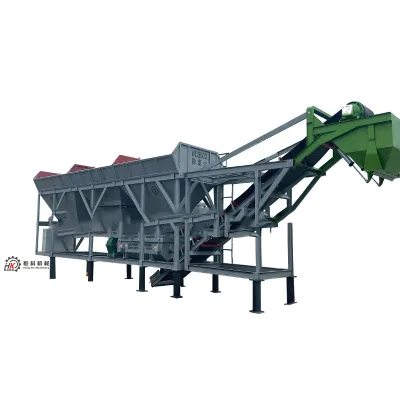
Belt Conveyor Stabilized Soil Plant Road Construction Stabilized Soil Mixing Plant
$16500.00 - $18900.00
Moq: 1




Comprehensive Sourcing Guide
Stabilized Soil Mixing Plant Sourcing Guide
Buyers must first distinguish between fixed and mobile configurations, as the supplied data indicates both Moving Type options exist for different project needs. The observed listings reveal a capacity range spanning from 40 to 800 tons per hour, requiring a precise match between the plant's output and the specific volume demands of the construction project. Selecting the wrong configuration can lead to significant logistical bottlenecks or underutilized capital investment, making this initial classification critical for operational efficiency.
The product scope also encompasses variations in power type and control systems, with electric power and automatic remote control systems being the primary observed attributes. Buyers should verify whether the specific unit offers a continuous drum mixing method or alternative approaches, as this directly impacts the consistency of the stabilized soil output. Understanding these fundamental scope differences ensures the procurement aligns with the technical requirements of the intended application, whether for large-scale infrastructure or smaller localized roadworks.
Product Scope and Observed Listing Signals
The observed price range of 6,600 to 130,500 USD reflects the substantial variance in machine specifications, including aggregate size limits and power consumption. A unit capable of processing 60mm aggregate with a power rating of 160kw will naturally command a higher price point than a smaller 300t/h model with lower power requirements. Buyers must correlate the listed price with the specific model number, such as WBZ300 or WBZ800, to ensure the cost reflects the actual capacity and component quality rather than a generic listing.
Listing signals also highlight the availability of customization for cement silos, with options ranging from 50t to 150t capacity. This flexibility is a key signal for buyers with unique storage requirements or space constraints at the construction site. However, the presence of a "Consulting customer service" note for voltage and dimensions suggests that these parameters are not standardized across all listings. Procurement teams must treat these as variables to be confirmed rather than fixed attributes to avoid integration issues during site installation.
Technical Specifications to Verify
Verification of the core components, specifically the motor and gear systems, is essential for ensuring long-term reliability in harsh operating environments. The data indicates a weight of 50,000kg for certain models, which necessitates a thorough review of the foundation requirements and transport logistics before finalizing the purchase. Buyers should request detailed technical drawings to confirm that the motor specifications align with the 70-160kw power range observed in the listings to prevent underpowered performance during peak operation.
The discharging height, observed between 3.7 and 4 meters, must be validated against the clearance constraints of the specific construction site. Additionally, the maximum aggregate size of 60mm is a hard limit that dictates the types of raw materials the plant can process efficiently. Buyers must ensure that the selected model, whether it is the Wbz500-D or another variant, can handle the specific material gradation required for the project without causing frequent blockages or excessive wear on the mixing drum.
Compliance and Safety Documentation
Certification status is a primary indicator of manufacturing quality, with ISO9001 and CE marks appearing as standard compliance indicators in the provided data. Buyers should explicitly request copies of these certificates to verify that the specific unit being purchased meets international safety and quality management standards. The presence of a Machinery Test Report is also noted as a provided document, which serves as critical evidence that the machine has undergone functional testing prior to shipment.
Safety documentation must also cover the electrical systems, particularly since voltage requirements are listed as "Consulting customer service" rather than a fixed standard. This ambiguity requires the buyer to secure a detailed electrical schematic and compliance statement before installation to ensure compatibility with local power grids. Relying on general certification claims without verifying the specific electrical safety documentation for the delivered unit can lead to hazardous operating conditions and regulatory non-compliance.
Cost Drivers and Commercial Terms
The total cost of ownership is heavily influenced by the payment terms, which are observed as TT or LC options in the listings. Buyers should negotiate these terms carefully, considering the lead time of 30 days and the potential for currency fluctuations if an LC is used. The high-end price of 130,500 USD suggests that larger, more complex units involve significant capital outlay, making the payment structure a critical factor in cash flow management for the procurement project.
Packaging and logistics represent another significant cost driver, with the product packing specified as "Container" or "by Container." The weight of the machinery, reaching up to 50,000kg, implies that shipping costs will be substantial and dependent on the destination port. Buyers must factor in the cost of containerization and freight insurance into their budget, as these expenses are not included in the base product price and can vary significantly based on the origin location, whether Henan or Guangdong.
Supplier Qualification and Quality Control
Supplier qualification should be assessed through the warranty terms, which are observed as a standard 1-year coverage for the machinery. This warranty period provides a baseline for the manufacturer's confidence in their product but requires clear definition regarding what components are covered and the response time for service. Buyers must verify if the warranty extends to the motor and gear systems, which are identified as core components, to ensure protection against early mechanical failures.
Quality control is further evidenced by the "Convenient Maintenance" advantage and the provision of machinery test reports. However, the brand name HengKe and the origin locations of Henan and Guangdong suggest a need to verify the specific factory's production capacity and history. Buyers should request references from previous clients in similar construction projects to confirm that the supplier consistently delivers units that meet the advertised operating efficiency and maintenance standards.
Long-Term Procurement Checks
Long-term procurement success depends on the availability of spare parts and the clarity of the maintenance protocol. The observation of "Convenient Maintenance" as a unique selling point must be validated by a detailed parts list and the availability of critical components like motors and gears. Buyers should establish a long-term supply agreement for spare parts to minimize downtime, ensuring that the 30-day delivery time for new units does not become a bottleneck for repairs.
Finally, the buyer must plan for the eventual decommissioning or relocation of the plant, considering the fixed or mobile nature of the equipment. The moving type, whether fixed or mobile, dictates the ease of transport and the potential for reusing the asset on future projects. A comprehensive lifecycle assessment should be conducted to ensure that the initial investment in a stabilized soil mixing plant remains viable over the long term, accounting for the 1-year warranty and the specific power and capacity requirements of future construction phases.
FAQs
What certifications do these plants have?
These stabilized soil mixing plants hold ISO9001 and CE certifications. The products are verified as new condition units. This ensures compliance with international quality standards for construction machinery operations.
Which models are available for purchase?
Available models include WBZ300, WBZ400, WBZ500, WBZ800, and Wbz500-D. The product line covers capacities ranging from 300 to 800 tons per hour. Specific model selection depends on your required production output.
Can the equipment be customized for my needs?
Yes, customization is available for these units. Buyers can select cement silo capacities of 50, 100, or 150 tons. Customization options allow the plant to fit specific project requirements and site conditions.
How long is the delivery lead time?
The standard delivery time is 30 days. This lead time applies to the manufacturing and shipping process. Buyers should plan their project schedules accordingly to ensure timely equipment arrival.
What is the power consumption of the plant?
Power consumption ranges from 70 to 160 kilowatts depending on the model. Some specific configurations may require up to 621.92 kilowatts. The exact power type is electric for all listed units.
Where are these plants manufactured?
These plants originate from China, specifically Henan and Guangdong provinces. The manufacturing location ensures access to established industrial supply chains. Buyers can expect products to be packed in containers for safe transport.
What is the warranty period for the machine?
The warranty period is one year for the equipment. This covers core components like motors and gears. A machinery test report is provided to verify performance before shipment.